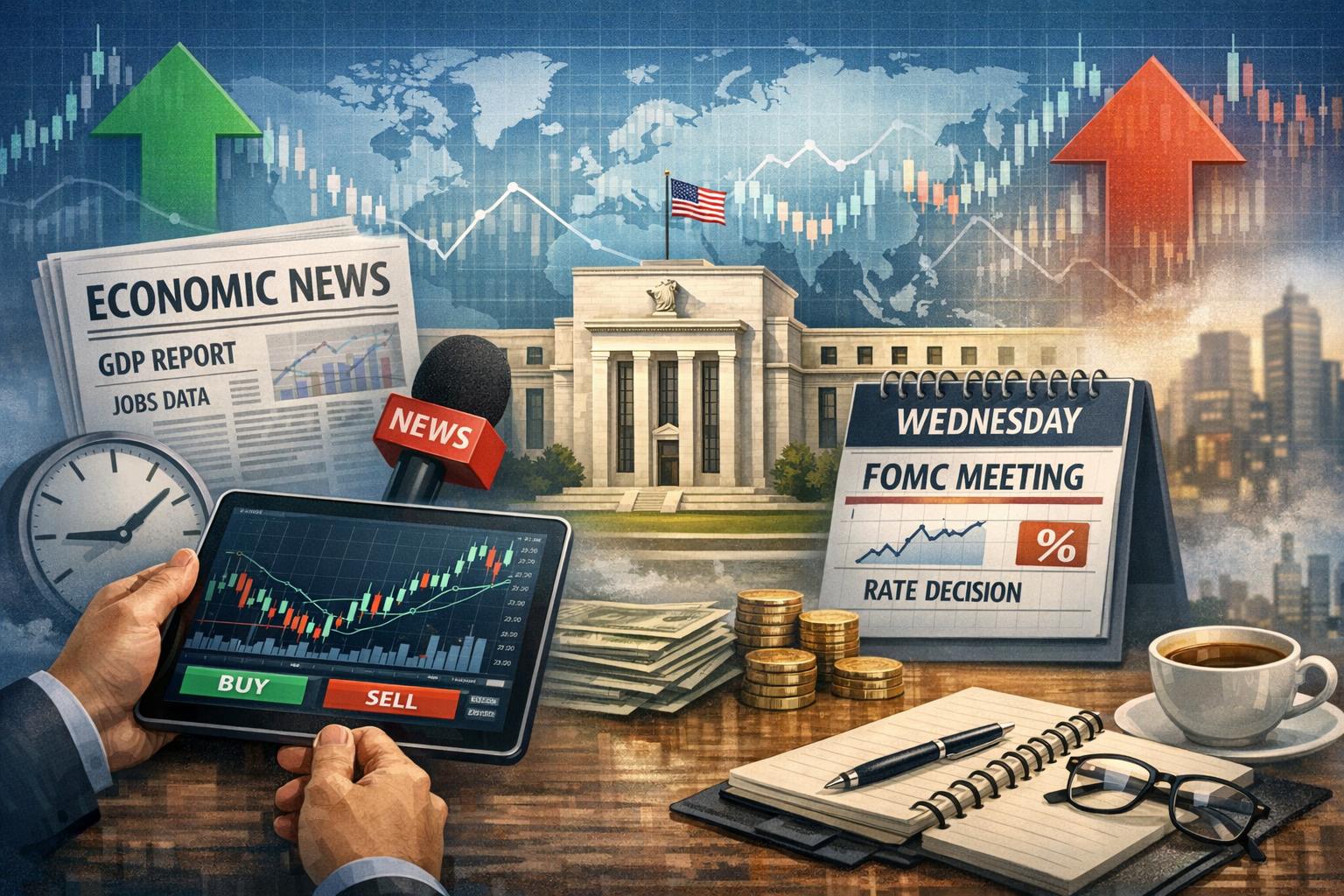
How to Trade Around Economic News Without Chasing Volatility
Understanding the Impact of Economic News on Markets
Economic news plays a central role in shaping financial market behavior. Scheduled data releases and unexpected developments provide new information about growth, inflation, employment, trade, and monetary policy. Market participants continuously assess this information to reprice assets such as currencies, equities, bonds, and commodities. The process of incorporating new data into asset prices can happen within seconds, especially in highly liquid markets supported by algorithmic trading systems.
Reports such as gross domestic product figures, inflation indices, employment statistics, retail sales data, manufacturing surveys, and central bank statements help investors evaluate the current and projected direction of the economy. Because financial markets are forward-looking, the impact of economic news is rarely limited to the immediate data itself. Instead, traders and institutional investors interpret releases in terms of future interest rate decisions, corporate earnings expectations, credit conditions, and capital flows. Understanding these transmission mechanisms provides a structured framework for evaluating volatility surrounding economic announcements.
Price movements following major data releases can be abrupt. Liquidity may temporarily decline as market participants adjust orders, spreads may widen, and short-term volatility often increases. These dynamics create both risks and opportunities. Traders who understand the structure of economic releases and how markets interpret them are better positioned to manage exposure and avoid reactive decision-making.
Transmission Channels Between Economic Data and Asset Prices
Economic data influences financial markets through several interrelated channels. The most direct channel involves expectations about monetary policy. Central banks base interest rate decisions on economic conditions such as inflation and employment. When new data suggests higher inflation or stronger labor markets, traders may anticipate tighter monetary policy. This expectation can strengthen a currency, increase bond yields, and affect equity valuations.
A second channel involves growth expectations. Stronger-than-expected economic performance can support corporate earnings projections, which may lift equity markets. Conversely, weaker data can reduce growth forecasts and impact cyclical sectors. Commodity markets also respond to growth signals, particularly when industrial demand is a factor.
A third channel arises from risk perception. In times of uncertainty, investors often reallocate capital toward assets considered relatively stable. Unexpected data releases may shift perceptions of economic stability, prompting changes in portfolio allocation. These capital flows can amplify price movements, particularly in foreign exchange markets where cross-border investment plays a significant role.
Understanding these channels clarifies why the same data release may have different effects across asset classes. For example, higher inflation can pressure bonds but support certain commodities. The broader macroeconomic context determines which channel exerts the dominant influence.
Types of Economic News to Watch
Economic news can be broadly categorized into scheduled releases and unscheduled events. Scheduled releases occur on predetermined dates. Statistical agencies and central banks publish calendars indicating when data will become available. These releases include employment reports, inflation metrics such as consumer price indices, interest rate decisions, and central bank press conferences. Because the timing is known in advance, markets form expectations ahead of the announcement.
Unscheduled news includes geopolitical developments, emergency policy actions, credit events, or unexpected policy statements. These events are more difficult to anticipate and may generate sharper immediate reactions because markets have not fully priced in potential outcomes. Volatility stemming from unscheduled events often depends on their scale and perceived persistence.
Another distinction involves leading, coincident, and lagging indicators. Leading indicators offer insight into potential future economic conditions, such as manufacturing surveys or consumer confidence reports. Coincident indicators describe current conditions, including industrial production or retail activity. Lagging indicators reflect past trends, such as unemployment rates, which adjust after broader economic shifts. Traders often focus on leading indicators because financial markets emphasize expectations rather than historical outcomes.
Market Expectations and Consensus Estimates
One of the most significant aspects of economic trading is the gap between actual results and market expectations. Financial institutions and research firms publish consensus forecasts before data releases. Asset prices frequently adjust in advance based on these projections. As a result, the degree to which actual data diverges from expectations often determines the magnitude of market reaction.
For instance, if inflation is expected to rise by a certain percentage and the published figure matches that expectation, markets may exhibit limited movement because the outcome was largely anticipated. However, a deviation above or below the forecast can trigger repositioning across asset classes. Traders who monitor consensus estimates alongside historical volatility can better gauge potential scenarios and prepare accordingly.
Planning Ahead for Scheduled Announcements
Preparation is a practical method for managing exposure during high-impact events. Reviewing an economic calendar provides clarity on when major announcements will occur. Traders can evaluate whether to reduce open positions, adjust stop-loss parameters, or temporarily avoid initiating new trades until after the release. This structured approach reduces reliance on rapid decision-making under changing conditions.
Planning also involves assessing the broader economic backdrop. For example, if central bank policy is the dominant theme in markets, interest rate decisions may overshadow other data releases. In periods where inflation concerns dominate, price-related reports may generate stronger responses than employment statistics. Context determines the relative importance of each announcement.
Preparing for Market Reactions
Anticipating possible reactions requires scenario analysis. Traders may outline potential outcomes, such as stronger-than-expected, weaker-than-expected, or in-line data. For each scenario, they can estimate how interest rates, currency values, or equity indices might respond. While it is not possible to predict every market movement, structured preparation reduces uncertainty.
Volatility tends to increase immediately following major announcements. Bid-ask spreads may widen temporarily, and short-term price spikes can occur before markets settle into a clearer directional move. Recognizing this pattern allows traders to avoid entering positions during the most unstable moments unless their strategy specifically targets short-lived volatility.
Implementing Risk Management Strategies
Effective risk management is essential when trading around economic events. The primary objective is to preserve capital while maintaining the flexibility to participate in favorable opportunities. Because volatility can accelerate rapidly, unprotected positions may experience losses beyond initial expectations.
Using Stop-Loss Orders
Stop-loss orders provide a predefined exit level if the market moves against a position. Establishing stop levels before a news release introduces structure and limits exposure to unpredictable swings. Placement requires consideration of recent volatility and technical levels. Stops set too tightly may trigger prematurely due to short-term fluctuations, while stops set too widely may expose the account to unnecessary risk.
Some traders adjust stop strategies during high-impact releases, recognizing that liquidity conditions may shift temporarily. Careful calibration of stop placement contributes to consistent risk management practices across varying market conditions.
Adjusting Position Sizes
Reducing position size is another method for controlling risk. Smaller trade allocations limit the financial impact of adverse movements while preserving participation in potential gains. Position sizing often reflects the expected volatility of a given release. High-impact events typically warrant smaller initial exposure compared to routine data releases.
Professional risk management frameworks frequently define maximum percentage risk per trade. Applying such parameters consistently across economic releases helps maintain discipline and reduces portfolio-level volatility.
Diversification and Correlation Awareness
Economic announcements can affect multiple correlated assets simultaneously. For example, interest rate expectations may influence currencies, bonds, and equity indices at the same time. Traders holding positions in correlated assets may inadvertently increase overall exposure. Monitoring correlations and diversifying appropriately can reduce concentration risk during major announcements.
Avoiding Emotional Trading
Heightened volatility can encourage impulsive reactions, particularly when price movements occur rapidly. However, disciplined traders rely on predefined strategies rather than short-term fluctuations. Maintaining a structured approach reduces the likelihood of entering or exiting trades based solely on immediate price changes.
Relying on a Trading Plan
A comprehensive trading plan outlines entry conditions, exit criteria, risk limits, and position sizing rules. When economic releases occur, adherence to these guidelines maintains consistency. The plan may specify whether trading during certain announcements is permitted or whether positions should be closed beforehand. Clear parameters reduce ambiguity.
Documenting trades and reviewing performance after major announcements contributes to gradual improvement. Patterns in execution, slippage, or volatility response can be analyzed and incorporated into future strategies.
Separating Facts from Market Noise
During significant economic events, commentary from media outlets and market participants can increase. Not all information is equally relevant. Distinguishing between verified data and speculative interpretation supports objective analysis. Focusing on official releases and measurable indicators provides a stable foundation for decision-making.
Scalping and Day Trading Strategies
Short-term traders often seek to capitalize on intraday volatility following economic announcements. Strategies such as scalping and day trading emphasize quick execution and narrow profit targets. These approaches demand familiarity with order types, execution speed, and liquidity conditions.
Adapting to Market Conditions
Market conditions can shift rapidly after a high-impact release. Initial volatility may be followed by consolidation or trend formation. Short-term traders monitor depth of market data, short-term support and resistance levels, and volume patterns to determine whether momentum persists. Flexibility in adapting to new information is central to maintaining consistency in fast-moving environments.
It is also important to recognize when volatility exceeds manageable thresholds. In some cases, spreads widen to a degree that reduces the efficiency of very short-term strategies. Waiting for spreads to normalize may provide more stable execution conditions.
Using Technical Analysis
Technical analysis offers tools for interpreting price behavior during volatile periods. Chart patterns, moving averages, trend lines, and momentum indicators can provide context regarding prevailing direction. While economic news can disrupt existing trends, technical levels often serve as reference points where price reactions intensify.
Combining technical structures with macroeconomic context enables traders to align short-term entries with broader market themes. For instance, a strong economic surprise that aligns with the prevailing trend may reinforce momentum beyond immediate volatility spikes.
Longer-Term Investment Perspectives
Not all market participants respond to economic news with short-term trades. Long-term investors evaluate data in relation to structural trends. Quarterly earnings outlooks, fiscal policy trajectories, demographic developments, and long-term inflation expectations often carry greater weight than a single data release.
From this perspective, economic news contributes incremental information rather than dictating immediate portfolio changes. Diversification, asset allocation, and periodic rebalancing typically matter more than short-lived price fluctuations. Nonetheless, significant policy shifts signaled through economic releases can prompt reassessment of strategic positioning.
The Role of Central Banks
Central banks are among the most influential sources of economic news. Interest rate decisions, policy statements, meeting minutes, and forward guidance affect expectations regarding liquidity and borrowing costs. Financial markets closely monitor language changes within official statements, as subtle adjustments may signal future policy direction.
When central banks emphasize data dependence, each major economic release gains additional importance. Inflation and employment figures may directly influence rate forecasts, increasing sensitivity to even moderate deviations from expectations. Traders who incorporate central bank communication into their analysis gain a clearer understanding of potential policy responses.
Conclusion
Economic news is an integral component of financial market dynamics. Data releases inform expectations about growth, inflation, and monetary policy, influencing asset prices through interconnected transmission channels. Both scheduled and unscheduled events can generate volatility, particularly when actual outcomes diverge from consensus forecasts.
Preparation, disciplined risk management, and structured analysis provide a systematic framework for navigating these events. By integrating scenario planning, appropriate position sizing, technical evaluation, and adherence to predefined trading plans, market participants can approach economic announcements with consistency. Whether engaged in short-term strategies or long-term investment decisions, a comprehensive understanding of how economic news shapes market behavior contributes to informed participation in financial markets.
This article was last updated on: May 22, 2026